Nano-Membrane SystemsJSL-NCS
NCS Nano-Membrane Composting System
The flagship membrane-covered composting system for continuous organic-waste treatment at farm, plant and regional-centre scale.
View productCovered aerobic fermentation with controlled air, moisture and odour
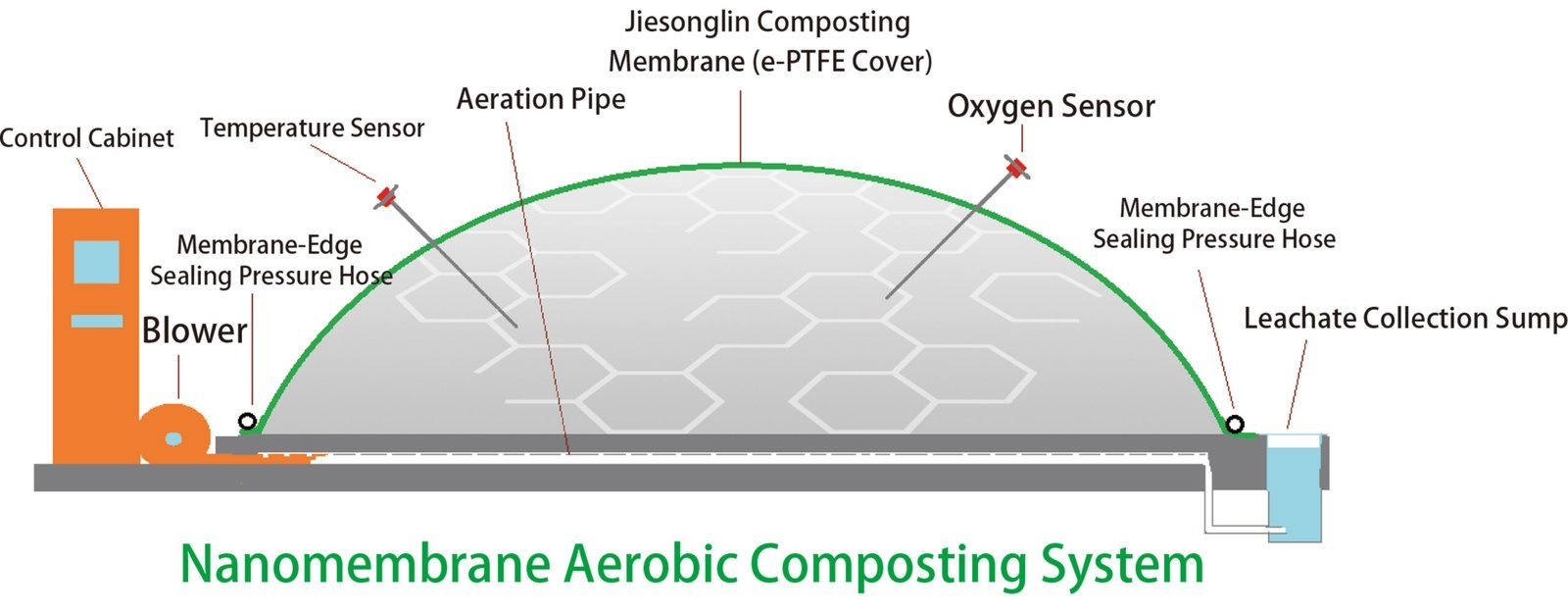
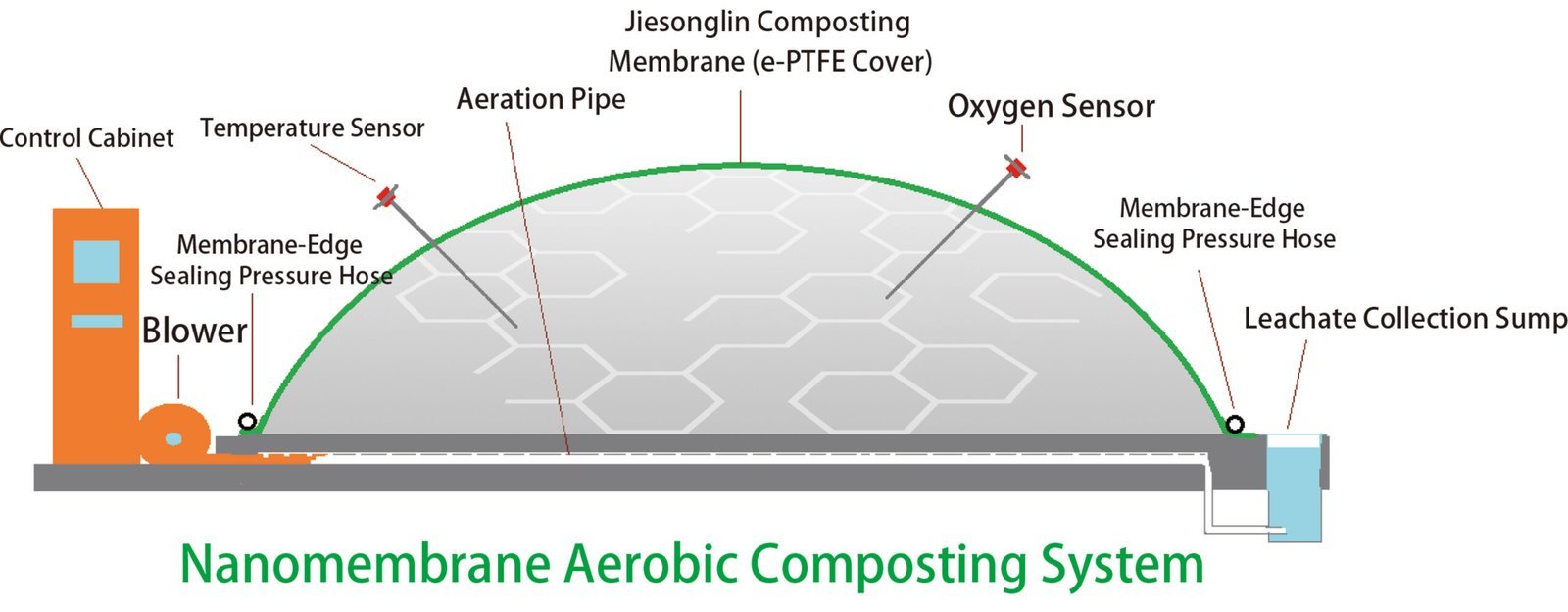
The nano-membrane cover sits at the centre of the process. It keeps rain out, holds heat and moisture in, and lets water vapour and carbon dioxide escape while the aeration system below the pile feeds oxygen to the fermentation process.
Each system is configured around the feedstock: daily volume, moisture, bedding or bulking material, site footprint and the intended use of the finished compost. Single production lines and regional processing centres use the same building blocks at different scales.
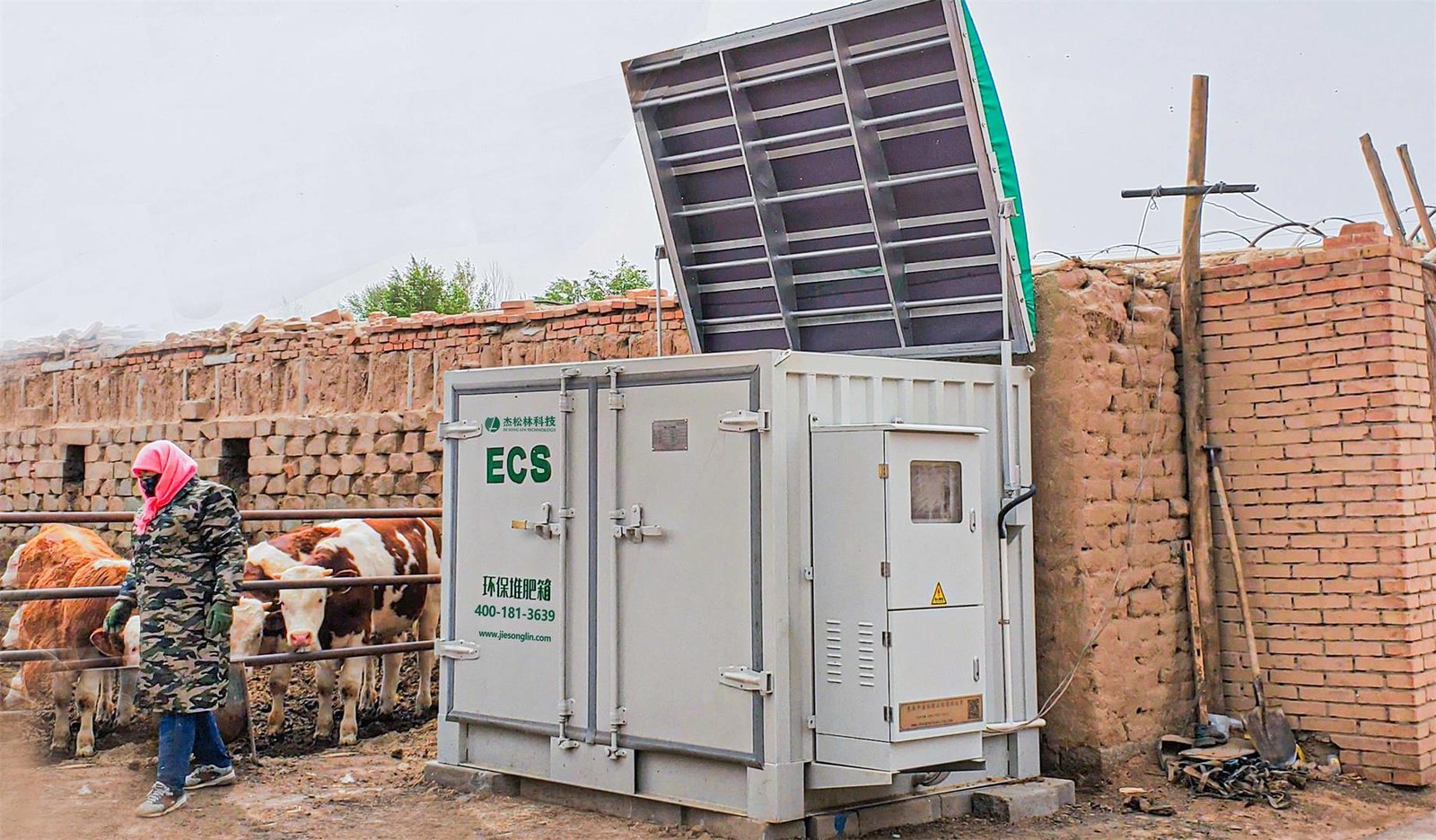
The same system appears under several names in buyer searches — nanomembrane composting system, membrane composting system or nano membrane composting system — and in plant terms it is the organic waste composting machine at the front of the line: the unit operation that converts raw organic waste into a stable compost before screening and finishing. Cover handling is part of daily operation: the film rolling machine (also called a membrane cover winder) that opens and closes the lanes is confirmed in the project scope, so the delivered system is operable from day one.
The flagship membrane-covered composting system for continuous organic-waste treatment at farm, plant and regional-centre scale.
View productA standardised membrane fermentation unit for sites that want the NCS process in a repeatable, building-block format.
View productTwo vocabularies describe this process, and buyers meet both. In North American and European process language, a covered, positively aerated pile is membrane-covered composting — a covered aerated static pile composting (CASP) configuration, often grouped with in-vessel composting system designs because the pile is enclosed, aerated and monitored rather than open. On B2B platforms, the same treatment need is usually listed in equipment language: aerobic fermentation tank, composting tank or aerobic fermentation equipment. Jiesonglin supplies the membrane-covered form of that process — nano-membrane aerobic composting, static piles and bins under a functional cover with controlled aeration — and the CASP composting system guide linked from our articles explains the regulatory framing in detail. In category terms, this series is the aerobic composting equipment at the front of the plant: everything downstream assumes it works.
The cover is the working component, not packaging. It is a semi-permeable membrane cover — a waterproof breathable membrane — that sheds rain, holds process heat and lets vapour escape while odour compounds are retained at the pile surface. Buyers also search for this assembly as a compost cover system: cover, aeration floor and controls specified together. Buyers comparing membrane materials will also see this cover technology specified as an e-PTFE membrane composting system; what matters in comparison is the combination of membrane, aeration control and operating method, which is why Jiesonglin quotes the three as one system.
Scale changes the format, not the process. A single farm runs one or two lanes or bins; an organic waste composting plant or a regional processing centre repeats the same lanes under one control and reporting structure. For municipal streams, the MSW composting system configuration treats the source-separated organic fraction of municipal waste — the fraction that can actually be composted — alongside sludge and green waste. In every format this is a static composting system: the pile stays in place while air, temperature and moisture are managed around it.
Livestock and poultry manure, sewage sludge, food-processing residues and similar organic waste. The recipe and aeration programme are set per feedstock after a material review.
Sizing starts from daily intake volume, moisture content and available footprint. Send those three inputs with your inquiry and the configuration can be scoped.
Quotations are prepared per project and state the equipment scope, control system, membrane material and commissioning support included. No fixed unit price is published because configuration drives cost.
It answers the same need — controlled aerobic treatment of organic waste — in a different physical form. Platform listings use tank language, and titles such as high temperature aerobic compost machine describe the same high-temperature aerobic phase. Jiesonglin builds that phase as covered static piles and bins rather than a sealed steel tank, which keeps civil works light and lets capacity grow lane by lane.
It is a smart composting system in the operational sense: a PLC control composting system runs automatic aeration composting programmes from temperature feedback, adjusting blower cycles to the phase of the batch, with IoT-connected sensors logging temperature and operating data for the operator. The point is not the screen — it is that aeration follows the biology instead of a fixed timer.
Buyers often describe the goal as an odorless composting process. No biological process is literally odour-free, but the membrane cover contains odour at the pile surface during the active phase, which is the period open windrows generate complaints. Site layout and a curing area complete the picture.
Series sizing starts from your feedstock and daily volume. Send both with your country and the team will reply with the configuration scope and quotation basis.